Uses for Hoop Buildings
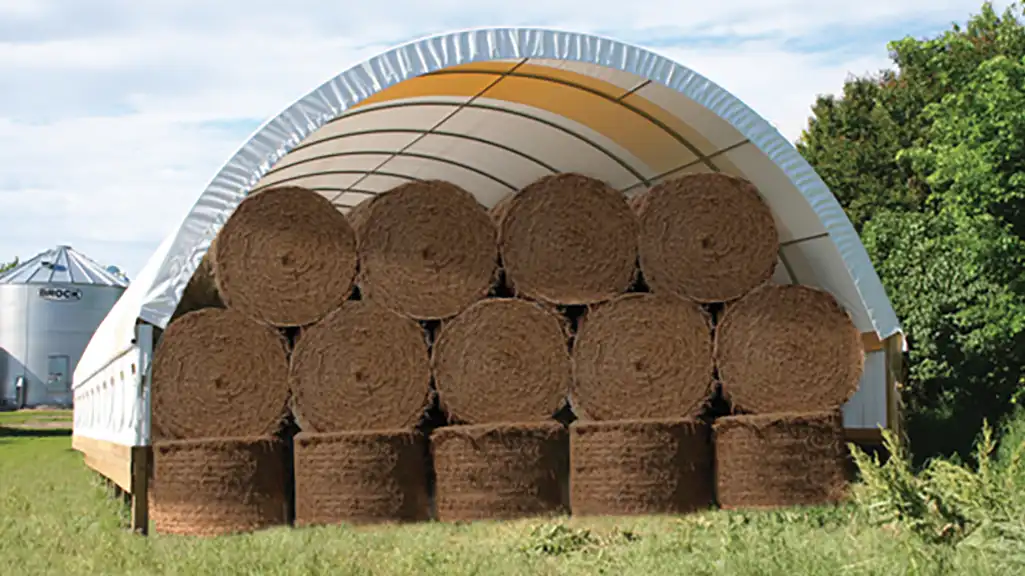
Hoop Barns for Hay Storage
Fabric Buildings: an Economical Choice to Store Hay Why store hay in a barn? Under cover is the best hay

Cattle farming is a rewarding and sometimes profitable business, but it requires careful planning. To get the most out of your investment in cattle, ensure your animals are comfortable and safe. That’s why many farmers are turning to hoop barns for cows to shelter them from the elements and maximize feed efficiency.
Fabric hoop barns are an economical and sustainable livestock housing solution. If you’re in the northern part of the United States, many find it’s great to have a hoop calving barn that you can also use as a machinery shed or for other ranch building purposes.
There are many different kinds of beef cattle barns. We hear from folks who just need a cattle shelter for calving season and maybe a little equipment. We also hear from businesses that need a 5,000-head hoop confinement structure. We know not all beef barns are the same, and we can help you with livestock barn plans to fit your needs, whatever they are.
On this page, we go into a lot of explanations that you may not need (what a hoop barn is, the benefits of a hoop barn cattle shed, blah, blah). For that reason, here’s a jump menu.
A hoop barn is a type of livestock shelter that has grown in popularity in recent years. Some are low-cost, movable, temporary structures made of a galvanized steel frame and a durable fabric cover. Other fabric beef barns are huge structures anchored in acres of concrete. Most don’t need that big a barn for a cattle shelter but, if you do, we have them.
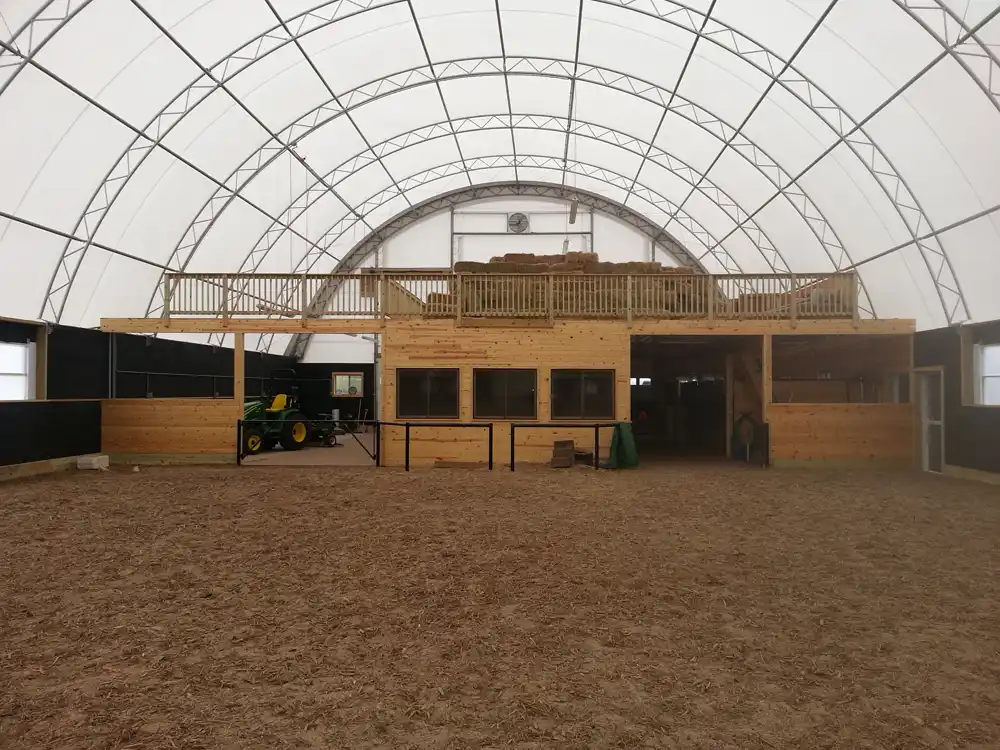
The average hoop cattle barn is relatively easy to construct from a kit and provides excellent protection from the elements for your livestock, equipment or hay. Our fabric barn interiors are post free, a wide open space, so you can design the fabric cattle building that works best for your needs.
Rushco hoop barns offer a variety of advantages for cattle farmers. Here are a few of the most important benefits of hoop barns for cows:
When selecting a hoop barn for your cattle, there are several factors you should consider. Here are a few of the most important ones:
Once you’ve selected a hoop barn, you’ll need to plan the design of your structure. Your particular design will probably be different from anyone else’s just as your cattle business is. Whether you need a loafing barn, a calving barn or even just hay storage, there is a hoop shed to fit your needs. Here are a few factors to consider when designing your hoop barn:
A hoop barn can help simplify caring for your cattle. It’s much easier to clean a dry pen or alley under cover than it ever is an open lot. Being under cover will be a lot nicer for your cattle and you also when you’re out there checking on them. If you’re a cattleman, you probably don’t need to be told the following:
Raising dairy cows in a hoop barn requires some extra care. Here are a few tips to keep in mind:
Hoop barns are an excellent option for cattle farmers seeking a cost-effective, efficient way to protect their livestock. Cattle shelters are easy to build and customize, offering a variety of benefits, including protection from the elements, improved air quality, and flexibility. With proper planning and care, you can ensure your hoop barn provides a safe and comfortable environment for your cattle.
When sizing your building, the most important number is your herd size now and in the future. Another consideration is your use of the building; pens or freestalls can take extra room.
There are many factors in how many cow/calf pairs or dairy heifers fit in a barn. AI will tell you our 40 x 120 building is perfect for 100 head. That information is partially correct if you are doing outside feeding, and also if it’s not too hot where you’re keeping those critters, and maybe some other factors. Your local extension office or ag college is a good source for localized information.
We like concrete walls for livestock buildings; they’re nice to buck up to on cleanouts. We have also seen guys have long-term success with posts and treated tongue-and-groove 2x’s. You’re the best judge of what foundation wall will stand up to your use.
Let us help you design a barn for cows. With our expertise and experience, we can help you create a hoop barn for beef that meets your needs and budget. Contact us today at 888-497-1088 to get started.
More information:
Fabric Buildings: an Economical Choice to Store Hay Why store hay in a barn? Under cover is the best hay
All Kinds of Livestock are Happy in a Hoop Barn One of the most common uses of hoop buildings
Fabric Salt Storage Buildings Northern states use fabric hoop buildings for salt storage because they offer cost-effective construction, superior rust