
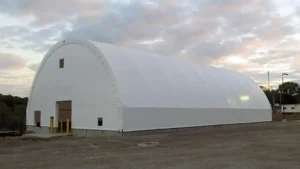
Fabric indoor storage buildings have emerged as a revolutionary storage solution in the warehousing industry. These structures are designed to provide a sustainable and versatile alternative to traditional warehouses. Unlike conventional buildings made of concrete or wood, hoop storage buildings are constructed from durable fabric materials and treated steel. This innovative approach offers numerous benefits, making fabric storage buildings the future of warehousing.
Fabric or canvas storage buildings offer a wide range of benefits, making them an attractive choice for anyone in need of additional storage space. One of the key advantages is their cost-effectiveness. The materials used in fabric storage buildings are more affordable than traditional building materials, resulting in significant cost savings. Moreover, the construction process is quicker, allowing businesses to set up their storage facilities in less time.
Another cost-saving benefit of many fabric buildings is that the fabric is somewhat light-transmitting. Some fabrics let in almost 20% of available light, eliminating the need for electric lighting during daylight hours. Farmers’ livestock love this, but it’s also handy to have light in a storage shed!
An often-overlooked advantage of fabric hoops for storage is their greater resistance to rot and mold. This is due in part to the better airflow that the round domed building naturally has, but also to the fact that steel and plastic fabric are not able to rot or mold. Our fabric buildings have steel frames that have also been treated to prevent rust and corrosion.
Perhaps the best benefit of fabric storage buildings is their portability. Unlike permanent structures, fabric buildings can be easily dismantled and relocated to a different site if needed. This flexibility is particularly advantageous for businesses operating in industries with changing demands or requiring temporary storage solutions. Additionally, fabric storage buildings can be customized to meet specific requirements, allowing businesses to optimize their indoor storage space.
Fabric storage buildings are designed with sustainability in mind. The materials used are eco-friendly and recyclable, reducing environmental impact. Additionally, fabric buildings require less energy during both manufacturing and erection than traditional building structures, further contributing to their sustainability.
The energy efficiency of fabric storage buildings also translates to lower carbon emissions, making them a greener alternative for those seeking to lower their carbon footprint. By choosing fabric storage buildings, businesses can contribute to a more sustainable future while enjoying the benefits of a versatile storage solution.
One of the key features that sets fabric storage buildings apart is their versatility and customization options. These buildings can be fully tailored to specific requirements, allowing you to optimize your storage space. The open-span design of fabric storage buildings eliminates the need for interior columns, providing users with maximum usable space.
Moreover, fabric storage buildings can be customized with various accessories and features to enhance functionality. Businesses can choose from options such as roll-up doors, ventilation systems, and lighting fixtures, among others. This flexibility allows businesses to create the ideal storage environment for their specific needs. Whether it’s storing perishable goods, heavy machinery, or vehicles, fabric storage buildings offer the versatility and customization options to accommodate various industries.
Fabric storage buildings find applications in a wide range of industries. One of the primary industries benefiting from fabric barns for storage is agriculture. These structures provide an ideal environment for storing crops, equipment, and livestock. The natural light and ventilation options ensure proper airflow and reduce the risk of spoilage. Additionally, fabric storage buildings are used in the construction industry to store materials and equipment conveniently on the job site.
Fabric storage buildings are also popular in the manufacturing and logistics sectors. Their versatility allows businesses to set up temporary or permanent storage facilities depending on their needs. These structures are ideal for storing raw materials, finished products, or equipment, providing businesses with a cost-effective solution to their storage requirements. Moreover, fabric storage buildings are used in the sports and entertainment industry to create temporary venues for events and exhibitions.
When choosing a fabric storage building, businesses should consider several factors. The first factor is the building’s size and capacity. It should be large enough to accommodate the business’s storage needs without compromising access functionality. Height can be a factor in storing equipment and some inventory.
Another important factor to consider is the quality of the fabric material used in the construction. It should be durable, weather-resistant, and able to withstand the specific conditions of the intended location. Additionally, businesses should consider the warranty and after-sales support provided by the fabric storage building manufacturer. A reliable warranty provides peace of mind and protection against potential defects or damage.
To ensure the longevity and optimal performance of fabric storage buildings, proper maintenance and care are essential but minimal. Tensioning of the fabric should be checked maybe a couple of times a year. Regular inspection of the structure is necessary to identify any signs of wear and tear, such as loose fabric or damaged frames. Prompt repairs should be made to prevent further damage, and a fabric building will have a life expectancy similar to that of any other building.
Your fabric cover does have a time-limited life, as would shingles or metal roofs in a more traditional storage building. We have found that most hoop buildings last 20-25 years. When the time comes, the cost of a new cover for the whole building is typically less than just the roof repair of a similarly sized building. The amount of labor involved is also far less.
The future of canvas indoor storage buildings looks promising. As businesses continue to prioritize sustainability and cost-effectiveness, fabric storage buildings offer a solution that meets these objectives. The advancements in fabric technology and construction techniques will further enhance the durability and versatility of these structures.
As the demand for indoor storage solutions grows, fabric storage buildings will continue to gain popularity across various industries. Perhaps most importantly, the use of sustainable materials and energy-efficient designs will continue to make fabric storage buildings an attractive choice for businesses looking to reduce their environmental footprint.
Fabric storage buildings offer a sustainable and versatile solution for businesses in need of additional storage space. With their cost-effectiveness, portability, and customization options, these structures provide numerous benefits over traditional warehouses. The energy efficiency, corrosion resistance, and sustainability features make fabric storage buildings a reliable and environmentally friendly choice for businesses.
As they continue to evolve and integrate with smart technologies, fabric storage buildings will shape the future of warehousing. To explore the benefits of fabric storage buildings for your business, call us at 888-497-1088 or take a look at the buildings we have available for your storage needs.